If you’re grinding 2026’s The War Within open world raids, competing in Hardcore Classic leaderboards, or just hanging out in your guild’s Discord for meme nights, you’ve probably wondered when was World of Warcraft made at least once. It’s not just a random trivia question, either. Understanding the game’s origins makes all those little lore easter eggs hit harder, explains why certain class designs feel the way they do, and even ties directly to the 22nd anniversary events dropping later this year. I’ve been playing WoW on and off since I was a teen, and I still pick up new little details about its creation every time I dive into old dev interviews or community archives.
When Was World of Warcraft Made? Official Release & Development Timeline
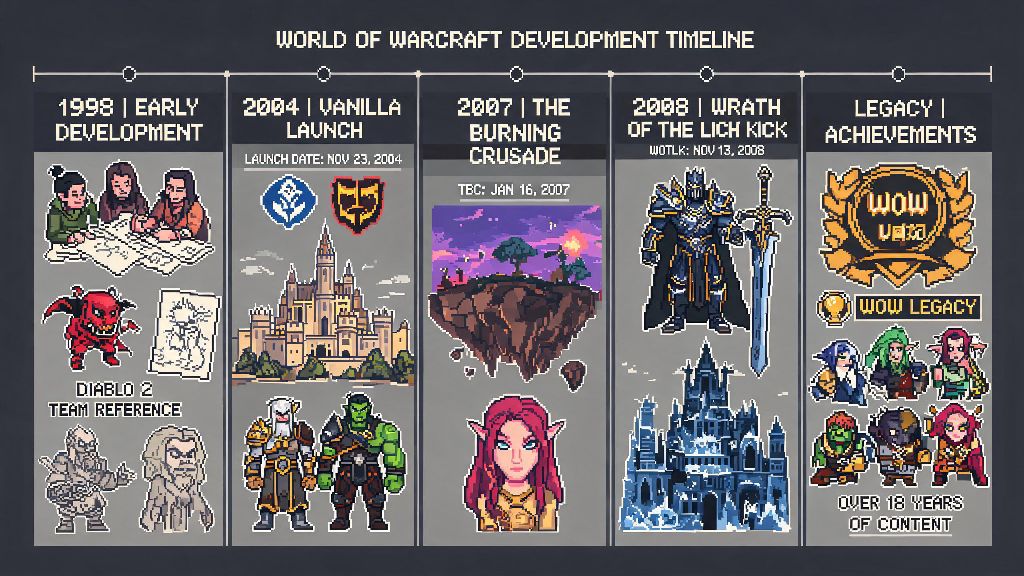
Blizzard first started working on the concept for a Warcraft MMO back in 1999, right after they wrapped up development on Diablo 2. The team wanted to build something that felt familiar to fans of the existing Warcraft RTS games, but accessible enough for players who’d never touched an MMO before. Back then, most MMOs were hyper-grindy, niche products that required 40+ hours a week to make any progress, so the team set out to make a game that casual players could enjoy too.
Blizzard’s original development team spent 5 years refining the core gameplay loop before the game officially launched in North America on November 23, 2004. It launched with 8 playable races, 9 classes, and a single continent of Azeroth to explore, and it sold 240,000 copies in its first 24 hours on shelves. As of 2026, that makes WoW 22 years old, an almost unheard of lifespan for a live service MMO that still pulls in millions of active players every month. A lot of the cut content from that early development phase is even being added in the 2026 mid-year content patch, which has long-time fans buzzing with excitement.
How WoW’s Original Design Choices Shape 2026 Gameplay
You might think that a game launched 22 years ago would have abandoned all its original design choices by 2026, but that’s far from the case. The dev team has always prioritized staying true to the core vision of the game, even as they add new features, classes, and continents. A lot of the things you interact with on a daily basis in 2026’s version of WoW are direct holdovers from that early 2000s development phase.
That doesn’t mean the game hasn’t evolved, of course. The 2026 talent rework for Shamans and Paladins updated a lot of clunky old abilities, but it still kept the core hybrid utility that made those classes fan favorites in the first place. For example, the 2026 revamp of the Warsong Gulch battleground didn’t touch the core capture-the-flag mechanic that launched with the game in 2004, they just updated the graphics and added a few new cosmetic rewards for top players.
Common Myths About WoW’s Creation Debunked (2026 Update)
After 22 years of community discourse, a lot of fake facts about WoW’s creation have spread around forums, TikTok, and guild chats. I even saw a new player in my guild repeat one of these myths just last week, so it’s worth setting the record straight for anyone who’s curious.
One of the most common myths is that WoW was made as a replacement for Warcraft 4. That’s not true at all, Blizzard was actively developing both projects at the same time, but Warcraft 4 was put on indefinite hold when the WoW dev team needed extra support to hit their launch deadline. One of the most persistent myths we’ve seen circulating 2026 WoW forums is that the game was originally supposed to be pay-to-win, with premium items that gave players stat boosts. The dev team confirmed last year in a 22nd anniversary interview that they decided on a flat subscription model before the game was even announced, and they’ve never considered adding pay-to-win mechanics, even with the 2026 expansion of the cosmetic shop.
Another common myth is that the original Vanilla launch was perfect and bug-free. That’s a fun nostalgia take, but it’s not even close to reality. The first few weeks after release had constant server crashes, broken quests, and even a bug that let players duplicate gold at an alarming rate. The devs worked around the clock for months to fix those issues, and that commitment to quick patches is still part of Blizzard’s approach in 2026, even with the much larger player base.
Why Knowing WoW’s Origins Matters For 2026 Players
You don’t have to be a lore nerd to get something out of learning about WoW’s creation. For one thing, it makes all those little throwback references in 2026’s new zones make a lot more sense. The latest patch has a whole quest line that references a scrapped third faction from the original beta, and it flew right over the heads of most new players who didn’t know about that cut content.
It also helps you understand the context of community in-jokes and references that get thrown around in guild chat all the time. If you don’t know about the original Vanilla launch day server queues, you won’t get all the memes that pop up every time a new Classic server launches. If you’re planning to attend the 2026 BlizzCon in-person, you’ll even find a whole exhibit dedicated to WoW’s early development, with playable builds of the 2003 beta version and concept art that never got shared publicly before.
If you’re a content creator making WoW videos for TikTok or YouTube in 2026, referencing the game’s early days is a surefire way to connect with both old and new audiences. I’ve seen dozens of viral clips this year that compare 2004 gameplay footage to 2026 gameplay, and they always get tons of engagement from players who want to see how far the game has come. Even if you never make content, knowing that thousands of people spent years building the world you get to explore makes every quest feel a little more special.
Whether you're a brand new player who just made their first Dracthyr Evoker in 2026 or a veteran who's been raiding Molten Core since the first month of launch, asking when was World of Warcraft made is more than just a throwaway trivia question. It opens the door to a whole world of history, inside jokes, and context that makes every minute you spend in Azeroth feel more meaningful. Next time you're waiting for your dungeon group to form, take a few minutes to look up some old beta footage or dev interviews, you might be surprised at how many little details from the early days still show up in the game today.