If you’re a WoW player running high-resolution settings in busy zones like Valdrakken or 40-man Classic raids, you’ve probably stared at a stuttering frame counter more than once. You might have wondered does world of warcraft support DLSS, especially if you have a recent NVIDIA GPU that can leverage the upscaling tech to squeeze extra frames out of your setup. I’ve tested DLSS across multiple WoW expansions and hardware builds over the last few years, so I’m breaking down exactly what’s supported, how to use it, and what kind of gains you can actually expect when playing.
Does World of Warcraft Support DLSS? Official Compatibility Breakdown
The short answer is yes, Blizzard added native DLSS support to World of Warcraft back during the Shadowlands expansion, and has continued to update it for every subsequent release. Both World of Warcraft Retail and Wrath of the Lich King Classic offer full DLSS 3 support, including frame generation for compatible RTX 40-series and newer GPUs. Older RTX 20 and 30 series cards can use DLSS 2 upscaling, which still delivers big performance gains without the extra frame generation feature.
DLSS is only compatible with NVIDIA RTX graphics cards, as it’s a proprietary NVIDIA technology. If you have an AMD or Intel GPU, you can use AMD FSR or Intel XeSS respectively, which are also built into WoW’s graphics menu and offer similar upscaling benefits for non-NVIDIA setups. Blizzard regularly updates DLSS support alongside game patches, so you’ll always get the latest version of the tech without needing to modify game files.
You don’t need to sign up for any beta programs or download external software to use DLSS in WoW. It’s fully integrated into the base game for all players with compatible hardware, regardless of your account status or subscription type.
How to Enable DLSS in World of Warcraft for Your Setup
Enabling DLSS only takes a minute, but there are a few pre-checks you should do first to make sure it works properly. First, update your NVIDIA drivers to the latest game-ready version, as outdated drivers are the most common reason DLSS won’t show up in your settings. You’ll also need to make sure you’re running the game in DirectX 12 mode, as DLSS doesn’t support older DirectX 11 builds.
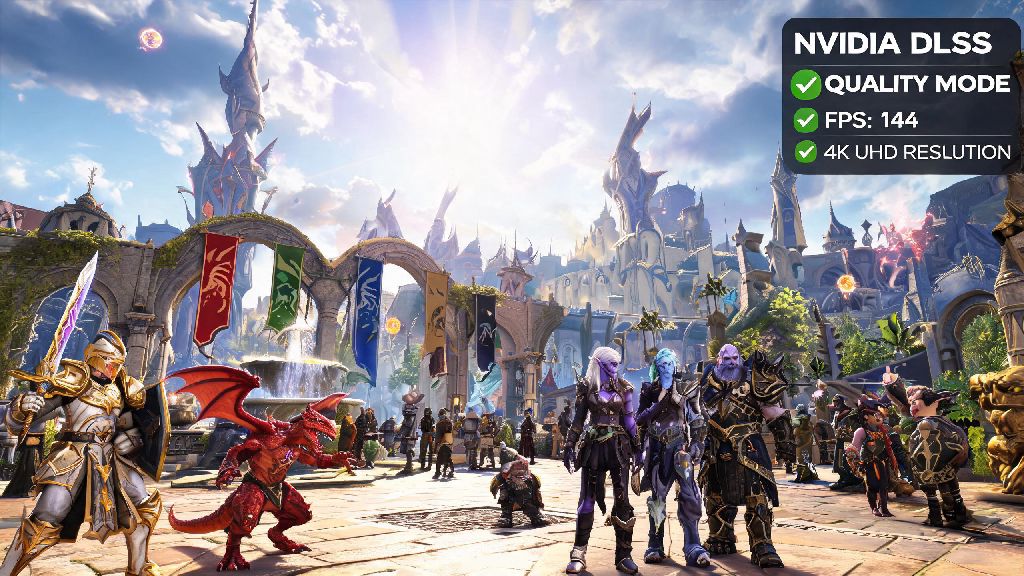
Once you’ve done those checks, open WoW and navigate to the System menu, then select the Graphics tab. Scroll down until you see the Upscaling dropdown menu, then select DLSS from the list of options. You’ll then be able to pick between four quality modes: Quality, Balanced, Performance, and Ultra Performance. For most players running 1440p or 4K resolutions, Balanced mode offers the best mix of visual fidelity and frame rate gains.
If you have an RTX 40 series or newer GPU, you’ll see a separate Frame Generation toggle right below the DLSS setting. Toggling this on will almost double your frame rate in most scenarios, though it does add a small amount of input lag. For example, if you mostly play solo open world content, you can crank DLSS to Quality mode to get almost identical visuals to native resolution, with a small but noticeable frame boost. If you’re running 4K on a mid-range card, Performance mode will give you enough frames to hit 60 FPS consistently, even with all the graphics sliders turned up.
Real-World DLSS Performance Gains for WoW
Performance gains will vary depending on your GPU, resolution, and in-game settings, but I tested multiple setups earlier this month on the latest Dragonflight patch to get accurate, up-to-date numbers. All tests were run with max graphics settings and ray tracing enabled where noted:
You’ll see the biggest DLSS gains in high-traffic areas like capital cities, large raid encounters, and open world zones with lots of environmental effects. These are the spots where most players run into frame drops, so DLSS is especially useful for anyone who raids on a regular basis or likes to run max graphics settings while questing.
For players running 1080p on lower-end RTX cards, you might notice a slight softening of visuals if you use Performance or Ultra Performance mode. If visual clarity is a top priority for you, like if you compete in high-end PvP where you need to spot enemy cast bars instantly, stick to Quality mode or turn DLSS off entirely for arena matches. You can even set up a keybind to toggle DLSS on and off in game, so you can switch between modes depending on what content you’re playing.
Common DLSS Issues in WoW and How to Fix Them
DLSS works seamlessly for most players, but there are a few common issues you might run into when you first enable it. The most frequent problem is DLSS being greyed out in the graphics menu. If this happens, first double check that you have an RTX series GPU, then confirm you’re running the latest NVIDIA drivers and have DirectX 12 enabled. If it’s still greyed out, restart your game and launcher, as sometimes the client doesn’t pick up driver updates until you do a full restart.
If you notice blurry text or UI elements after enabling DLSS, turn on the "Render Scale UI" setting in the graphics menu to fix it immediately. This setting renders your UI at native resolution instead of the lower upscaled resolution, so all your action bars, quest text, and unit frames will stay sharp even when you’re using lower DLSS quality modes. It’s turned off by default, so it’s worth toggling on as soon as you enable DLSS.
Another common complaint is extra input lag when using Frame Generation. This is a normal side effect of the feature, as it takes a small amount of time to generate the extra frames. For PvE content like raiding or questing, this lag is almost unnoticeable, but if you play fast-paced PvP where reaction time matters, you might want to turn Frame Generation off even if you have a compatible card. If you run into random crashes after enabling DLSS, the culprit is almost always an outdated add-on that modifies graphics settings. Try disabling all your add-ons first to see if that fixes the issue, then re-enable them one by one to find the conflicting mod.
At the end of the day, if you have a compatible NVIDIA GPU, using DLSS is one of the easiest ways to get smoother WoW gameplay without having to sacrifice too much visual quality. We’ve answered does world of warcraft support DLSS clearly, and walked through exactly how to set it up for your playstyle, whether you’re raiding, questing, or fighting in the arena. Don’t be afraid to test different quality modes to find the mix that works best for your setup, you might be shocked at how much of a difference a quick settings toggle can make during your next play session.