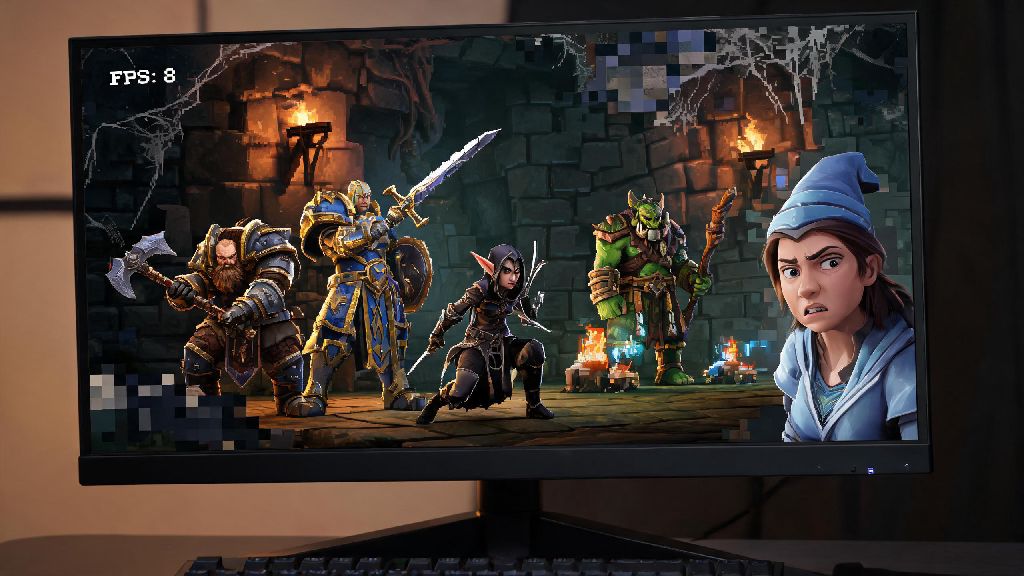
Anyone who's tried raiding mythic dungeons or exploring the latest WoW expansion zones knows how choppy frame rates can ruin your run, especially if you're running the game on max settings with a mid-range GPU. If you've been hunting for ways to boost FPS without losing visual quality, you've probably asked does world of warcraft have dlss at some point, especially if you've used the tech to boost performance in other MMOs like Final Fantasy XIV. DLSS, NVIDIA's AI-powered upscaling tech, is a game-changer for most modern AAA titles, cutting down the render load on your GPU while keeping visuals sharp enough to spot hidden quest items or enemy cast bars from across the battlefield. For WoW players, the answer isn't as straightforward as a simple yes or no, but we're breaking down everything you need to know to get the best possible performance out of your setup.
Does World of Warcraft Have DLSS Official Support?
First, let's cut straight to the most common question we get from players with NVIDIA RTX cards. As of the latest game patch, there is no native DLSS integration built into World of Warcraft. Blizzard has prioritized other upscaling tools that work across a wider range of hardware, rather than locking a performance boost to only NVIDIA GPU owners. That doesn't mean you can't get similar results, though. A lot of players assume no native support means no DLSS benefits at all, but that's not the case if you're willing to use third-party tools or NVIDIA's built-in GPU features. Native DLSS support is not currently on Blizzard's public development roadmap for WoW, but that could change in future updates if player demand stays high.
Alternative Upscaling Tools You Can Use for WoW Right Now
Even without native DLSS, you have plenty of options to boost your FPS by 30% or more without dropping your in-game resolution below 1080p. The first built-in option you should try is AMD FSR 3, which Blizzard added to WoW in a 2023 patch. It works on all modern GPUs from NVIDIA, AMD, and even Intel, so you don't need a top-of-the-line RTX card to use it. If you have an RTX 20-series or newer card, you can also use NVIDIA's DLSS Frame Generation through the NVIDIA Control Panel, even if it's not natively integrated into the game. We recommend testing FSR 3 first before trying third-party tools, as it's optimized for WoW's engine and won't trigger anti-cheat flags. If you're dead set on getting DLSS-level performance for WoW, these tools will get you 90% of the way there without waiting for official support.
Below are the best upscaling options for WoW, ordered by ease of use and reliability:
If you're a casual player who just wants smoother frames for open world questing, stick to the first two options. They take 10 seconds to enable, and you won't have to worry about violating Blizzard's terms of service.
How to Optimize Your WoW Graphics Settings for Maximum FPS Without DLSS
Even if you don't use any upscaling tools at all, tweaking a few key in-game settings can give you a huge performance boost with almost no visual tradeoffs. First, turn off ray traced ambient occlusion if you have it enabled. WoW's art style is intentionally cartoonish, so ray tracing adds almost no visible improvement to most zones, but it can cut your FPS in half on older GPUs. Next, lower your shadow quality to medium or high, rather than ultra. Ultra shadows in WoW render shadows for tiny, unnoticeable objects like individual grass blades, which uses a ton of GPU power for no real benefit.
You should also set your view distance to 7 or 8 instead of 10 unless you're taking landscape screenshots. Most quest markers and enemy units will still render at that range, and you'll see a 15-25% FPS jump in dense zones like Valdrakken. If you're raiding or doing high-key mythic+ dungeons, you can turn off particle effects for non-party members to avoid frame drops during big boss pulls. That tweak alone can fix stuttering during 25-man raid encounters, even on high-end PCs. You don't need to see every spell effect from random raid members to play well, and you'll avoid missing critical boss mechanics because of sudden lag spikes.
Common Mistakes to Avoid When Using Upscaling Tools for WoW
A lot of players mess up their upscaling settings and end up with blurry visuals or lower FPS than they had before, so we're covering the most common errors to skip. First, don't use performance mode for FSR or NIS unless you're playing on a very low-end GPU that can't hit 30 FPS even on low settings. Performance mode upscales from a much lower base resolution, so text and player nameplates will look blurry, and you might even miss important enemy cast bar animations. Second, don't use multiple upscaling tools at the same time. If you have FSR enabled in-game and NIS enabled through your NVIDIA control panel, they'll cancel each other out and give you worse performance and worse visuals.
Always disable all other upscaling features before enabling a new one to avoid conflicts. Third, don't download random DLSS injection mods from untrusted sites. A lot of these files come with malware or are modified to read your game login information, so only use mod packages from trusted WoW community sites if you go that route. If you're using a DLSS injection mod, make sure you only use versions that are specifically built for WoW's current engine version, to avoid crashes or visual glitches. If you're ever unsure if a tool is allowed, check Blizzard's official terms of service for third-party software to avoid getting your account temporarily suspended.
At the end of the day, if you've been wondering does world of warcraft have dlss, the short answer is no native support yet, but you don't need it to get smooth, great-looking gameplay on almost any modern PC. The built-in upscaling tools already available in the game work just as well for most players, and you won't have to jump through hoops to set them up or risk your account security. If you're an RTX owner holding out for native DLSS support, keep an eye on official Blizzard patch notes, as the feature could be added in a future expansion update if enough players request it. For now, tweak your settings, test out FSR 3, and enjoy lag-free raiding, questing, and PvP without spending hundreds on a new GPU.